Autoliv highlights research leadership at IRCOBI 2026

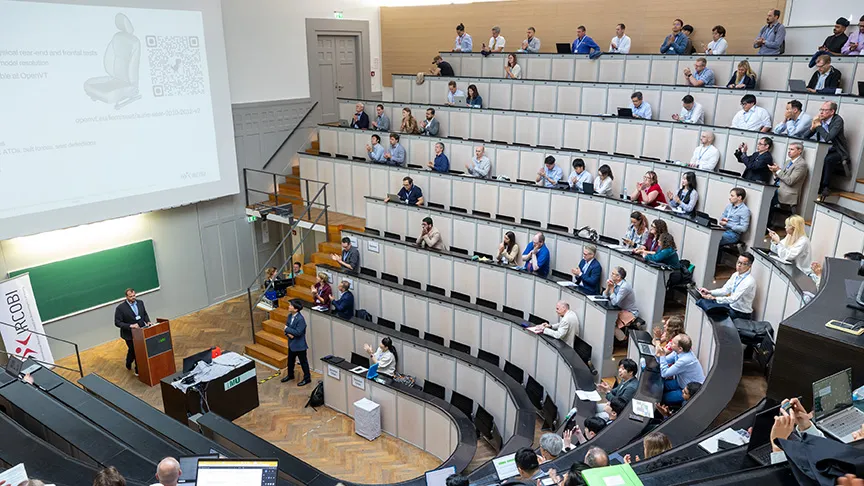
Autoliv reinforced its commitment to advancing vehicle safety and injury prevention at the 2026 International Research Council on the Biomechanics of Injury (IRCOBI) conference, contributing research, technical expertise, and industry collaboration across several key safety areas. IRCOBI remains one of the world's leading scientific conferences dedicated to injury biomechanics and road safety research, bringing together experts from academia, industry, and regulatory organizations to share knowledge and accelerate safety advancements. 

This year's conference highlighted significant progress in virtual testing using Human Body Models (HBMs), as well as growing research efforts focused on protecting vulnerable road users, including pedestrians, cyclists, motorcyclists, and users of emerging mobility solutions.

Virtual testing with Human Body Models is becoming a key enabler for future vehicle safety," 
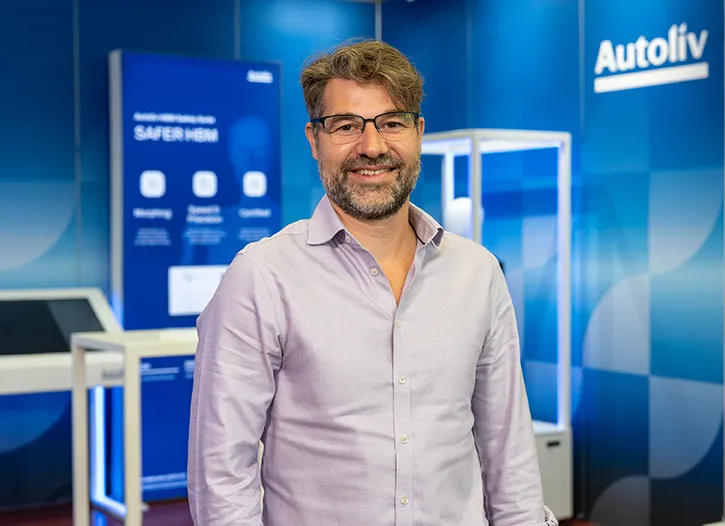
said Nils Lübbe, Senior Director Research at Autoliv. 
"These tools allow us to better address diversity in the population, study a wider range of crash scenarios, and ultimately develop safety solutions that provide better protection for more people."

Advancing industry knowledge through research

At IRCOBI 2026, Autoliv researchers presented studies spanning multiple areas of vehicle and road safety, including:

  • Human Body Model applications for understanding how factors such as age, stature, and seat position influence injury risk.
  • Open-access simulation tools made available to support the broader research community.
  • Innovative approaches to improving protection for vulnerable road users.
  • Emerging safety topics that can help guide future research, product development, and regulatory discussions.

The research reflects Autoliv's long-standing commitment to translating biomechanics insights into real-world safety solutions and supports the company's growth initiatives focused on future mobility and next-generation occupant protection.

Both at IRCOBI26
Autoliv IRCOBI26

The conference also reinforced the growing importance of addressing the safety needs of vulnerable road users. New research focused on pedestrian biomechanics, cyclist protection, powered two-wheelers, micromobility users, and helmet performance, highlighting opportunities to reduce injuries among some of the most vulnerable groups in traffic.

Autoliv continues to invest in research and innovation aimed at improving protection across a wide range of road users and crash environments. The company's portfolio includes safety technologies designed to support occupant safety as well as solutions that can contribute to protecting vulnerable road users.

Participation in IRCOBI allows Autoliv to share findings, challenge ideas through scientific review, and collaborate with leading researchers around the world.

IRCOBI President Spyros Masouros recognized the company's contributions, stating:

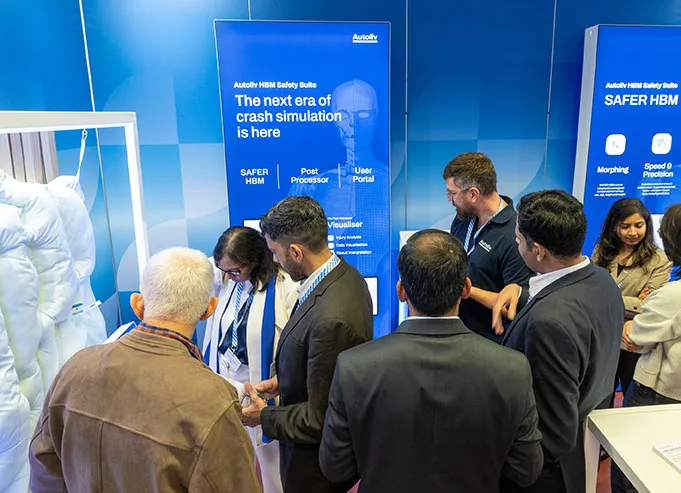
 I am highly impressed with Autoliv's contribution to the IRCOBI conference through its involvement in and funding of research presented, the impressive sponsor stand, and its continued technical leadership in advancing vehicle safety and injury prevention research."

IRCOBI President Spyros Masouros

Autoliv at IRCOBI - by Nils Lübbe, Senior Director Research at Autoliv.

IRCOBI conference

About the SAFER Human Body Model: The SAFER HBM was founded by Chalmers University of Technology, Autoliv and Volvo Cars. It is further developed and brought to market by the Fraunhofer-Chalmers Centre, together with the founding organizations, to promote safety and innovation for the greater good.

Read more

Research paperAuthors
Influence of Driver Stature and Seat Position on Injury Risk in Frontal Car Crashes: A Comparative Analysis of Field Data and Human Body Model SimulationsMartin Östling, Daniel Schmidt, Hanna Jeppsson, Linda Erikson, Thomas Lich
Influence of Rib Cortical Bone Age on Human Body Model Probabilistic Rib Fracture Risk PredictionsKarl-Johan Larsson, Johan Iraeus
Short Communication: Assessing SAFER HBM Kinematic Response Sensitivity in Frontal Impacts with Various Reclined Seating PosturesEma Jokubaityte, Manuel Valdano, Krystoffer Mroz, Francisco Jose Lopez-Valdes
Short Communication: Update and Correlation of the Open Access LS DYNA Toyota Auris Seat Model for Rear-End ImpactsKarl-Johan Larsson, Henrik Sundberg, Mikael Videby, Linda Eriksson
Short Communication: A Comparative Crash Database Study of Upper Extremity Injury Patterns among Car Occupants in the USA and GermanyAmanda Hederskog, Ron Schindler, Ayush P. Mehta, Jason Forman
Towards Biofidelity Assessment of Upper Extremity of a 50th Percentile Male Finite Element Human Body ModelRamakrishnan Balaji Iyer, Ayush P. Mehta, Amanda Hederskog, Christer Lundgren, Bronislaw Gepner, Jason L. Forman
Short Communication: Assessment of Ankle Injury Mechanisms in Vehicle Crashes: A Comparative Simulation-Based Study Using HBMs and an ATDRamakrishnan Balaji Iyer, Bronislaw Gepner, Mohan Jayathirtha, Jason Hallman, and Jason Forman
Short Communication: Relative Risk in Heavy Goods Vehicle Rollover Crashes Using Crash Databases from the USA, Germany and IndiaLoay Al-Salehi, Aarti Ranmal, Ron Schindler, Hanna Jeppsson, Peter A. Cripton
Repositioning Forward-leaning-vehicle Occupants During Normal Driving and Harsh BrakingJohan Davidsson, Sahar Samadiboushehri, Emma Larsson, Dan Bråse, Jonas Östh
Safety benefit assessment for systems that protect vulnerable road users in collisions with heavy goods vehiclesRon Schindler, Junaid Shaikh, Aarti Ranmal, Guorong Li
Investigation of the Relationship between HIC and Impact Conditions in Scooter-type Powered-Two-Wheeler-to-Car CrashesToshiyuki Yanaoka, Yasuaki Gunji, Zarir Hafiz Zulkipli, Tetsuya Matsushita, Jolyon Carroll, Pradeep Puthan, Siti Atiqah Mohd Faudzi, Kak D-Wing, Yusuke Miyazaki
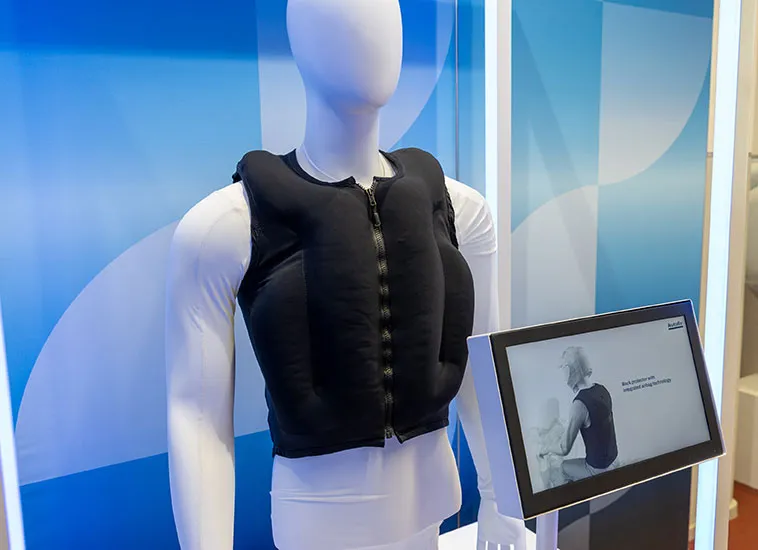
A Bicyclist Airbag Vest on the SAFER Human Body Model: Protection of Shoulder, Thorax, and HeadBei Li, Jolyon Carroll, Bengt Pipkorn, Nils Lubbe
PTW Rider Injury Mechanisms from Full-Scale Crash Testing Using PMHSJohn Bolte IV, Jolyon Carroll, Mara Van Meter, Angela Tesny, Daniel Meringolo, Erin Higinbotham, Shiyang Meng, Yun-Seok Kang, Amanda Agnew
Short Communication: Crash and Injury Characteristics of Powered Three-Wheelers in India: Implications for Occupant Protection and Safety RegulationJunaid Shaikh, Hanna Jeppsson
Short Communication: Development of a Realistic Thoracic Impact Test for PTW-to-Vehicle CrashesDaniel A. Meringolo, Jolyon Carroll, Yun-Seok Kang, John H. Bolte IV
Short Communication: Does a Chin Bar-Mounted Action Camera Increase Head Injury Risk in Facial Impacts?Shiyang Meng, Lucas Low, Mazdak Ghajari
Short Communication: Facial Impact Conditions for Assessing Motorcycle Helmets, Informed by Reconstruction of Real-World Collisions.Lucas Low, Claire Baker, Will Dawber, Shiyang Meng, Mazdak Ghajari